Thinking about a move to Bradbury and the privacy of a gated estate? You’re not alone. Bradbury’s foothill setting, large parcels, and equestrian lifestyle attract buyers who want space, quiet, and a controlled entry. In this guide, you’ll learn how gated living works here, what to verify before you buy, how private showings are handled, and what due diligence looks like for luxury and horse properties. Let’s dive in.
Why Bradbury appeals to gated buyers
Bradbury is a very small, affluent city in the San Gabriel Valley with a strong estate and equestrian tradition. According to the U.S. Census Bureau, the population is around 1,000 residents, and the housing stock is mostly large, single-family estates. The city’s low-density character means privacy, acreage, and long driveways are the norm.
Commercial and multi-family development in Bradbury is minimal. Zoning focuses on residential estate parcels, so you’ll want to confirm parcel-specific rules with City of Bradbury City Hall and the Los Angeles County Department of Regional Planning. Most sales in the upper tier are multi-million-dollar transactions, and many luxury estates trade off-market for discretion.
Gated access types and what to verify
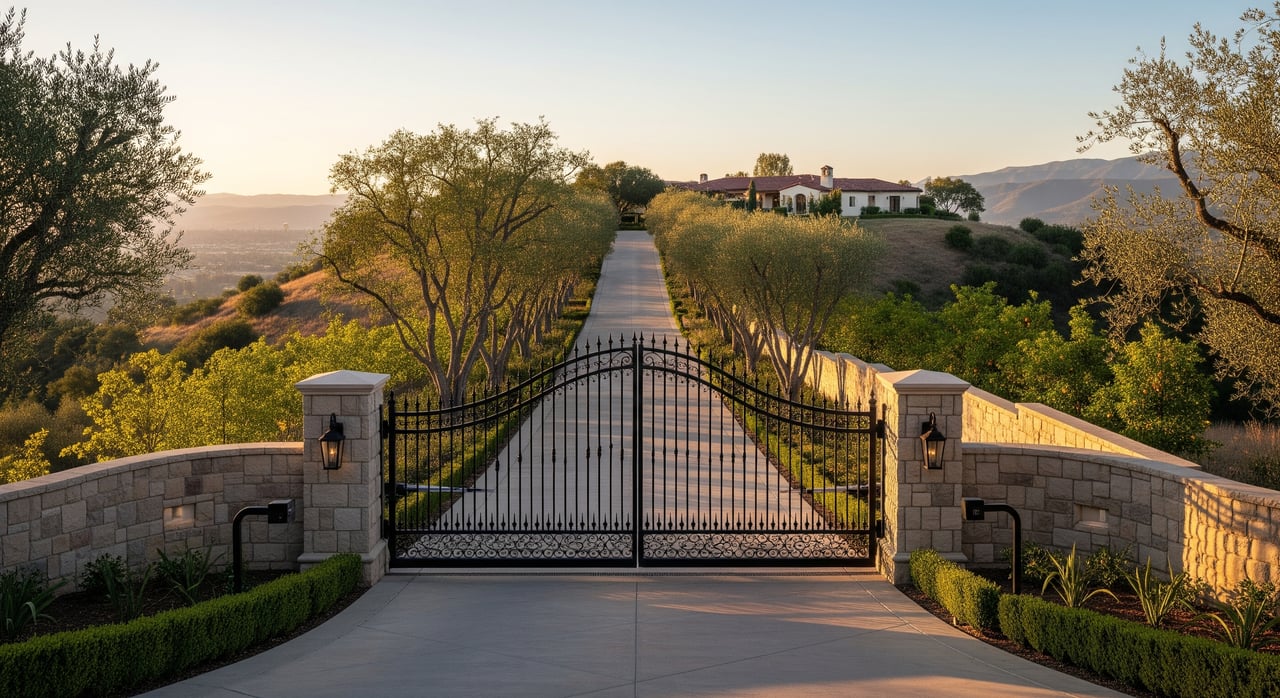
Gating in Bradbury ranges from a simple private driveway gate to shared private roads with common entries. Each setup has different obligations and paperwork. Here’s what to look for.
Private parcel gates
A private gate on a single parcel is controlled by the owner. You’ll want to confirm installation permits, placement on the property line, and whether any parts encroach on a public right-of-way. Ask for the permit history and any warranty info on motors, keypads, and backup power.
Shared gates and private roads
Some estates use a shared gate on a private road. These often come with recorded maintenance agreements or HOA-like arrangements among owners. Before you write an offer, request the recorded documents that explain cost sharing, reserve funds, repair schedules, and who controls access codes or transponders. Title and your agent can help you review these.
Guarded or attended gates
Guarded gates are less common in Bradbury than in master-planned communities, but you will see them at certain estates. Staffing, hours, and operating costs should be spelled out in agreements. Confirm how visitor access is vetted and logged, especially if you rely on vendors or household staff.
Key documents to review
- Recorded easements, road maintenance agreements, and covenants
- Any gate placement or encroachment details
- Permit history for existing gate systems
- Security devices and service contracts, including remote access apps and cellular/fiber connectivity
Work with your title team and consult Los Angeles County Department of Regional Planning for easement questions, and City of Bradbury City Hall for permit history.
Safety, wildfire, and emergency access
Emergency access is not optional. Local fire and law enforcement agencies typically require reliable, immediate access to gated properties. The Los Angeles County Fire Department may require a Knox Box or similar rapid-entry device, plus fail-safe design and battery backup. Your gate should have a manual override and a clear contact protocol for emergencies.
Bradbury’s foothill location brings wildfire considerations. Some properties lie within mapped Fire Hazard Severity Zones. Review CAL FIRE resources for state wildfire guidance and hazard mapping. Plan for defensible space, fuel modification plans, and vegetation management that meet local standards. Early talks with LACoFD can help you understand what compliance looks like and how it may affect insurance and underwriting.
Equestrian estate essentials
Many Bradbury estates feature barns, arenas, turnout paddocks, and tack rooms. If horses are part of your move, add zoning and operations to your checklist.
Zoning and operations to verify
- Allowed number of horses per acre and barn setbacks
- Whether any commercial equine uses require a conditional use permit
- Stable operations, manure management, and vector control rules via county authorities
- Water source and capacity for irrigation and wash racks, plus septic sizing for barn areas
For stable and animal-keeping rules, consult Los Angeles County Animal Care and Control and City Hall for local fit. Confirm water source and permits if there is a private well.
Equestrian-specific inspections
- Barn structures and roofs, stall safety, and electrical around water
- Arena base and drainage, fencing condition, and gate hardware
- Water delivery to barns and wash racks
- Soil stability, floodplain exposure, and any old fuel tanks or chemical storage
If the property operated as a boarding facility, request veterinary records, vaccination logs, and any incident or liability history.
How private showings work for luxury gated estates
Privacy is a feature of the Bradbury market. Expect a structured showing process that protects sellers and respects security.
Pre-appointment screening
High-end sellers commonly require proof of funds or pre-approval before confirming a showing. Showings usually run through your buyer’s agent. In some off-market or pocket listings, you may be asked to sign a confidentiality or non-disclosure agreement.
On-site protocol and privacy
Appointments are often narrow time windows. Security or staff may open the gate remotely or meet you at entry. Sellers sometimes limit photos or video. Your agent should clarify what is allowed before you arrive.
Inspections and vendor visits
Inspections are scheduled separately and coordinated with the listing agent and security. Larger inspections, like roof, septic or well, pool, equine facilities, and geotechnical reviews, may require longer time blocks and additional access planning for trucks and equipment.
Offers and timing
When privacy is key, sellers may manage timing, counters, and access tightly. Prepare a complete offer package with proof of funds, pre-approval, and realistic timelines. Strong documentation signals that you can perform without drama.
Due diligence and timeline for Bradbury estates
Bradbury transactions often involve complex properties, shared roads, and specialized inspections. Build in time and bring the right experts.
Typical timeframes
- Escrow: 30 to 45 days is common. For bespoke or out-of-state purchases, plan for 45 to 60 days or more. Cash can close faster.
- Inspections: 10 to 21 days for initial due diligence, with extra time for specialized inspections such as equine facilities, septic, wells, or geotechnical.
- Title and documents: Allow time to review easements, maintenance agreements, and any covenants.
Core due diligence checklist
- Title and recorded documents: Easements, private road agreements, covenants, and any trail or conservation rights
- Survey: ALTA or boundary verification, especially for older fences on large parcels
- Systems and structure: General home, foundation, roof, pool or spa, electrical, HVAC
- Specialized inspections: Septic inspection, well flow and water quality, barn and arena review, pest/WDO, and geotechnical for slopes
- Fire safety: Defensible space, vegetation management, and any fuel modification plans with LACoFD
- Utilities and connectivity: Water meter status, sewer vs septic, gas, electrical capacity for barns and EVs, broadband for gate control and security
- Insurance: Early review of wildfire exposure, slope, flood, and equine liability with a broker
- Permits and compliance: Verify permit history for additions, barns, and past improvements. Unpermitted work can slow financing or require remediation.
Post-offer negotiation points
- Safety and structural repairs for barns, fencing, or drainage
- Shared gate and private-road cost allocation or reserve funding
- Septic remediation, well output issues, or code compliance fixes
- Gate equipment warranties and transfer of remote devices or codes
For disclosures and California transaction standards, your agent will use forms and guidance supported by the California Association of Realtors.
A step-by-step plan for relocating buyers
If you’re moving from out of the area, keep things simple and structured.
Get financially ready. Secure proof of funds or pre-approval so you can confirm showings fast.
Hire a local expert. Choose an agent with Bradbury and San Gabriel Valley experience who can coordinate off-market opportunities, security protocols, and specialized vendors.
Pre-screen properties. Use virtual tours and curated media to narrow options before making travel plans.
Call the authorities early. For a target property, check permitting with City of Bradbury City Hall and fire access and vegetation rules with the Los Angeles County Fire Department. If equestrian uses matter, confirm with county animal care and planning.
Calendar your inspections. Book core inspections early and block time for specialized visits. Allow access for trucks through gates and private roads.
Clarify access and security. Align on codes, escorts, and photo rules before every visit.
Build in time. If you are relocating from out of state or abroad, plan for 45 to 90 days to coordinate travel, due diligence, and approvals.
The bottom line
Gated living in Bradbury offers rare privacy, acreage, and an equestrian lifestyle, but it comes with specific due diligence. Verify ownership and maintenance for any shared gate or private road. Plan for emergency access and wildfire readiness. If horses are part of your plan, add zoning, stable operations, and equine inspections to your list. With the right team, a clear process, and early calls to local authorities, you can move into your Bradbury estate with confidence.
Ready to explore Bradbury estates with a trusted local guide? Our team helps relocation buyers coordinate private showings, off-market opportunities, and the specialized inspections these properties need. Connect with Megan Ferrell to start a tailored search.
FAQs
Is Bradbury a good fit if I want a gated estate?
- Yes, Bradbury is known for large, private estates with gated entries and low-density zoning that supports privacy and space.
How do shared gates and private roads work in Bradbury?
- Shared gates usually come with recorded maintenance and cost-sharing agreements; review title documents to see who pays, who controls codes, and how repairs are handled.
What wildfire rules should I know for Bradbury properties?
- Expect defensible space requirements and potential Fire Hazard Severity Zone considerations; confirm specifics with the Los Angeles County Fire Department and review CAL FIRE resources.
What inspections matter for equestrian properties in Bradbury?
- In addition to standard home inspections, plan for barn structure and electrical, arena base and drainage, fencing, septic and well checks, and a pest/WDO report.
How are showings handled for luxury gated estates?
- Most sellers require proof of funds or pre-approval before confirming a short, supervised showing window, and they may limit photos or video for privacy.