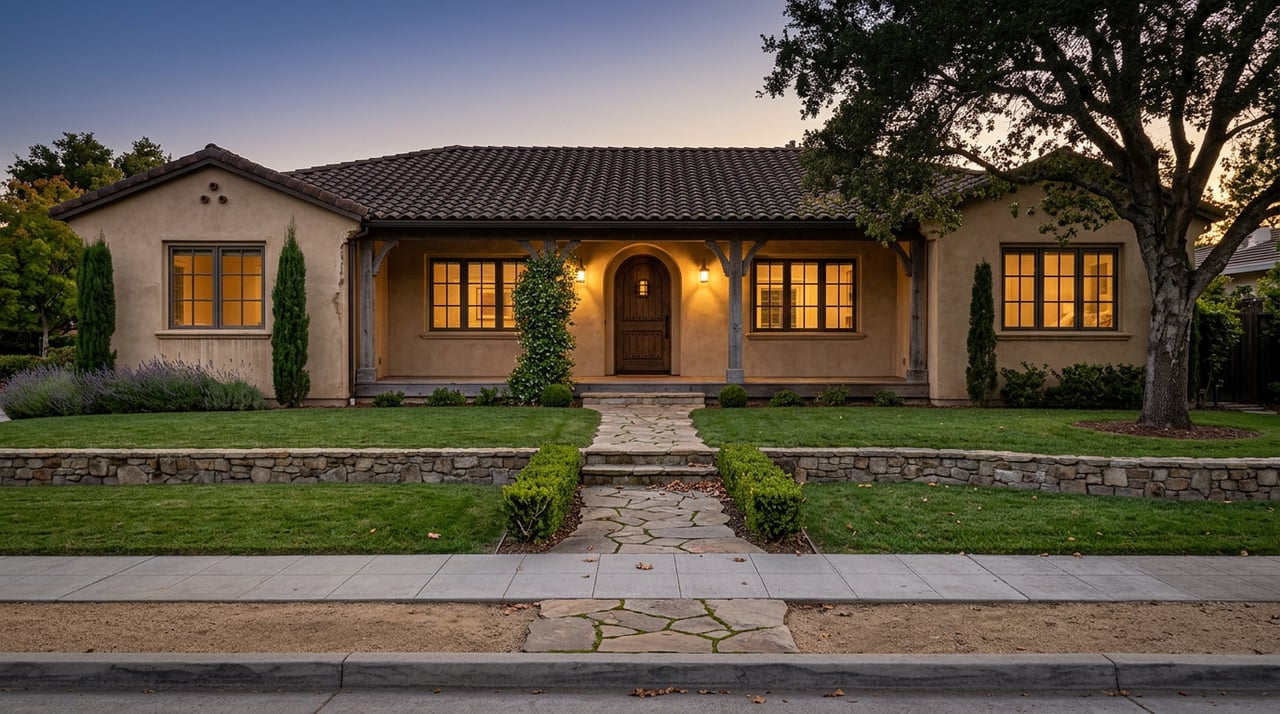
California spent the past year telling families that settling a loved one's estate had gotten easier. Assembly Bill 2016 let a primary residence worth up to $750,000 skip full probate court and move through a faster petition instead. For most of the state, that number covers a real house. In San Marino, it covers roughly a third of one.
Entry-level homes in the city start around $2.1 million. The median sale price sits near $3.2 million. Estate-tier properties on streets like Lombardy Road and St. Albans Road routinely close between $5 million and $8 million. A reform built around the idea of an "average" California home simply does not reach a city where the average home is four times the shortcut ceiling. If you're an executor, successor trustee, or family member sorting out a San Marino property this year, that gap is the first thing worth understanding, because it decides which legal path the sale has to take.
What the new law actually changed
AB 2016 created two separate thresholds, and the distinction matters. The small estate affidavit, which lets heirs collect personal property like bank accounts and vehicles without court involvement, rose to $208,850 for deaths on or after April 1, 2025, and has since climbed again to $239,700 for deaths on or after April 1, 2026. That threshold covers cash and belongings, not real estate.
The bigger change was a new Petition to Determine Succession to Real Property, which lets a decedent's primary residence transfer without full probate if its gross value doesn't exceed $750,000. That's the number that made headlines. It's also the number that quietly excludes almost every single-family home in San Marino.
Where San Marino sits against that number
| Threshold or price point | Amount |
|---|---|
| Small estate affidavit (personal property) | $239,700 |
| AB 2016 primary residence shortcut | $750,000 |
| San Marino entry-level home, 2026 | roughly $2.1 million |
| San Marino median sale price, 2026 | roughly $3.2 million |
| San Marino estate-tier homes | $5 million to $8 million+ |
An entry-level San Marino home is close to three times the AB 2016 ceiling. A median home is more than four times over. The shortcut was written for a housing market that doesn't exist in this ZIP code, which means the executor of a San Marino estate is almost always working within the traditional probate framework, not around it.
What full probate actually requires here
Full probate isn't automatically the slow, contentious process people picture. Under the Independent Administration of Estates Act, a personal representative granted full authority can list the property, accept an offer, sign the purchase contract, and close escrow without ever appearing before a judge. The one requirement is a Notice of Proposed Action mailed to every heir and beneficiary at least 15 days before the sale closes. If no one objects, the sale proceeds on that timeline. The accepted offer generally needs to sit within 10 percent of the court-appointed appraiser's valuation, or the sale gets kicked into a hearing regardless of authority level.
Limited authority is a different situation entirely. Every sale under limited authority requires a confirmation hearing, and that hearing is open to overbidding from anyone in the courtroom.
An accepted offer under limited authority isn't really accepted until a judge says so. The buyer's inspection, appraisal, and earnest money can evaporate the moment someone raises a hand at the confirmation hearing.
For a family already managing grief and logistics, knowing which authority level the court granted at the outset changes what the listing timeline looks like, and it changes what to tell a buyer about how firm their accepted offer actually is.
Two price tiers, two different waiting games
San Marino's own market behavior adds another layer on top of the probate calendar. Data from the first half of 2026 shows homes priced below $3.5 million routinely drawing overbid ratios above 100 percent of list. Above $4 million, the dynamic flips: buyers hold real leverage, negotiation is common, and marketing periods stretch out.
Days on market tell the same story from a different angle. Well-priced homes across the city are going under contract in roughly 25 to 45 days. Homes listed above $4.5 million without recent updates or a compelling lot can sit for 90 days or longer before sellers adjust. And because San Marino closes somewhere in the range of 50 to 80 sales citywide in a typical year, the market is thin enough that a single high-value estate transaction can swing a monthly median by hundreds of thousands of dollars.
For an executor selling a sub-$3.5 million property under full IAEA authority, that means the open market and the 15-day Notice of Proposed Action clock are often running at the same time. Multiple offers can arrive within days, and the estate needs to be ready to move once one is accepted. For an estate-tier property above $4 million, the pressure looks different. The bigger risk isn't a bidding war, it's an under-marketed listing sitting quietly for months while carrying costs accumulate, which argues for a patient, well-documented marketing plan from day one rather than a quick listing built for a market that isn't behaving that way at this price point.
Where the tax math changes after a death
There's a separate financial question that often gets tangled up with the probate timeline, and it's worth untangling. Consider a homeowner who bought in San Marino in 1985 for $550,000 and is still living in the home today, now worth roughly $3.2 million. If that owner sold directly, the gain would run around $2.65 million. After the $500,000 married-couple exclusion, roughly $2.15 million would remain taxable, and at a combined federal and California rate near 33.3 percent, that's a tax bill exceeding $720,000.
Heirs inheriting that same property generally face a very different calculation. Property that passes through an estate typically receives a stepped-up basis, resetting the cost basis to the home's value on the date of death rather than the original 1985 purchase price. That single difference can eliminate most or all of the taxable gain a living owner would have faced selling the identical house. It's a conversation worth having with the estate's CPA before the listing agreement is signed, not after escrow closes, because the numbers can shift the decision between selling quickly and holding the property longer.
Questions worth asking before the listing agreement is signed
- Did the court grant full or limited independent administration authority, and has that been confirmed in writing?
- Has the probate referee's appraisal been completed, and does it reflect current San Marino comparables rather than an outdated valuation?
- Is the 15-day Notice of Proposed Action clock already running, or does it start only once an offer is accepted?
- Has the estate's CPA reviewed the stepped-up basis calculation before any marketing begins?
- Does the marketing plan account for which price tier the property falls into, since sub-$3.5 million and $4 million-plus homes are behaving like two different markets right now?
A short FAQ
Does a trust sale go through the same court process as probate? Generally, no. Property held in a properly funded revocable living trust that becomes irrevocable at death typically transfers through private trust administration, without court hearings. A successor trustee still has fiduciary responsibilities and needs to document the sale carefully, but the process moves outside the probate court entirely.
How long does a full probate sale typically take in Los Angeles County? Formal California probate commonly runs 12 to 24 months from filing to final distribution, and Los Angeles County's court calendar often lands on the longer end of that range. The listing and sale of the home can often happen well before the estate formally closes, especially under full IAEA authority.
Selling a San Marino home as part of a trust or estate isn't a standard resale with extra paperwork attached. It's a different transaction with its own timeline, its own court requirements, and its own tax questions, layered on top of a local market that behaves differently above and below the $3.5 million line. Megan Spargo-Ferrell & Team has coordinated trust and probate sales across San Marino and the San Gabriel Valley, working alongside estate attorneys and CPAs to structure the listing timeline around court requirements rather than against them. If you're managing a San Marino property through an estate right now, reach out for a Get Home Valuation conversation grounded in current comparables and a clear read on which legal path your sale actually needs to take.